
Corsican bees or wasps? Understanding, protecting and taking action at Camping Merendella
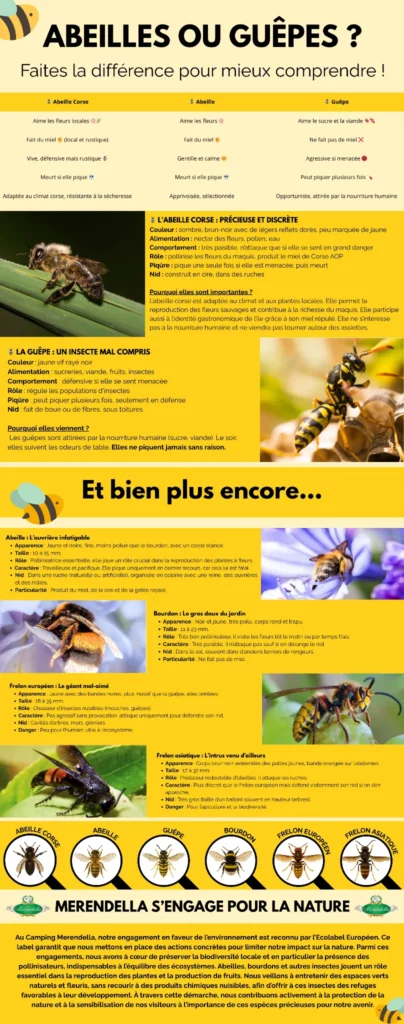
Making a difference for better coexistence: in Corsica, the local bee is precious, discreet and essential for pollination. Wasps, often confused with bees, are opportunistic and can sting several times. At Camping Merendella, we have put up a prevention sign explaining these differences and the right actions to take to protect biodiversity and avoid incidents during your holiday.
- Corsican bees or wasps? Understanding, protecting and taking action at Camping Merendella
- Recognising species: Corsican bee, bee, wasp, bumblebee, hornets
- Corsican gastronomy: PDO honey, a treasure of the maquis
- FAQ — Corsican bees at Camping Merendella
- Video about Corsican bees
- Conclusion on Corsican bees
Recognising species: Corsican bee, bee, wasp, bumblebee, hornets
Corsican bee: precious, adaptable, honey-producing
Colour: dark brown-black with golden highlights. Behaviour: very peaceful, only stings if threatened. Role: pollinates the maquis and contributes to the high quality of Corsican PDO honey. Nest: in hives, built from wax. Interest: species adapted to the island climate, resistant to drought. So you can see that we have our own bees in Corsica and that we try to preserve them as best we can, even within the Merendella campsite in Corsica.
Wasps: opportunists at the dinner table
We will describe it again for those who still have difficulty telling the difference between a bee and a wasp. First, the colour: bright yellow with black stripes. Behaviour: defensive if it feels threatened. Role: predator of harmful insects. Sting: can sting multiple times. Why it comes: attracted to sugar and meat; in the evening, follows the smell of food. Useful tip: do not leave sugary foods lying around, cover drinks and rubbish bins.
Bumblebees, European hornets, Asian hornets: putting things into perspective
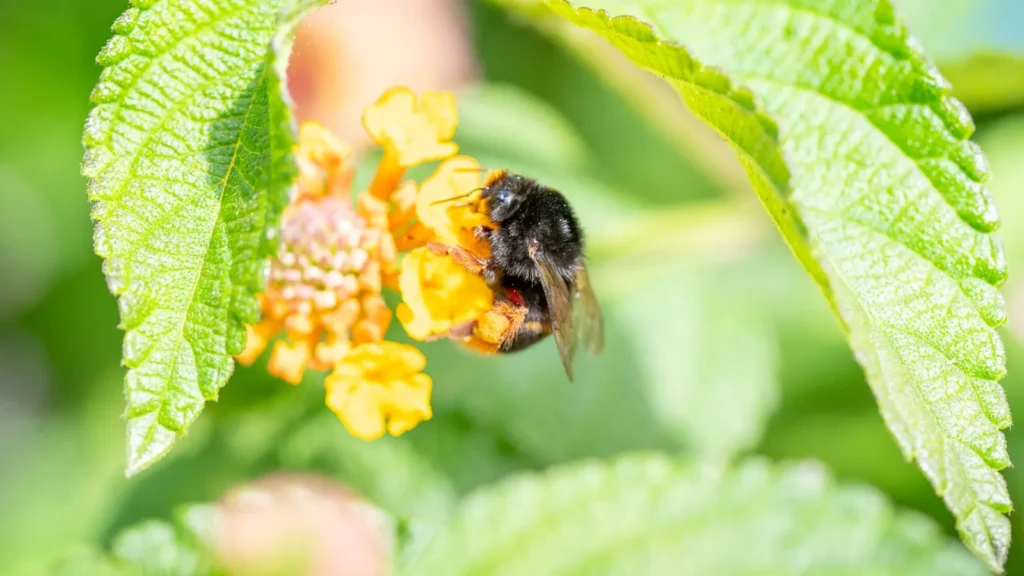
Bumblebee: large, very hairy, excellent pollinator, does not make honey. European hornet: great insect hunter, impressive but generally not very aggressive away from the nest. Asian hornet: invasive, predator of bees and threat to beekeeping; report nests to local authorities.
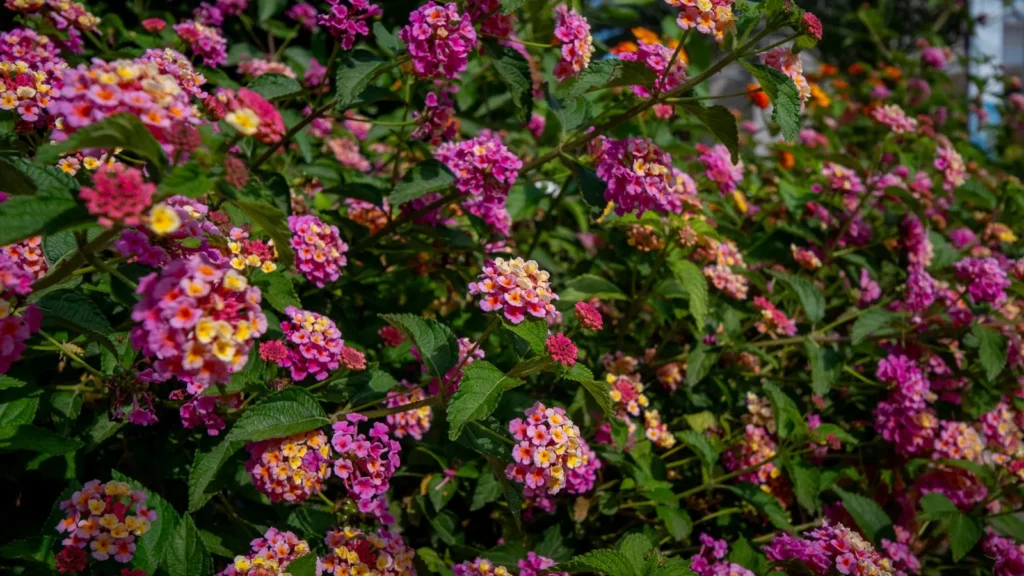
Photo credit: Yolhan @Colorfulens
Prevention in everyday life: the right things to do when camping
Our educational signs, created by our on-site team, remind visitors of some simple rules: observe without waving your hands, do not crush bees, protect sweet foods at the table, dispose of waste in closed bins, and report any unusual nests to reception. These simple precautions are enough to avoid most stings and preserve the wildlife that is so important to the ecosystem of Corsica and our campsite.
Merendella is committed to: flower-filled spaces, zero harmful products, raising awareness
We maintain honey-producing areas, favour local species and eliminate hazardous chemicals. Clear signage explains the difference between bees and wasps, how to behave, and useful numbers to call. Our goal is to ensure your comfort while protecting the pollinators that enrich the maquis. Find out more about our commitments under the European Ecolabel, which, in line with this approach, ensures that your camping holiday is as healthy and natural as possible without compromising on comfort.
Corsican gastronomy: PDO honey, a treasure of the maquis
Corsican honey – Mele di Corsica PDO reflects the island’s floral diversity: heather, chestnut, arbutus, myrtle… Mild and flowery in spring, woodier and more full-bodied in summer: each jar tells the story of a season and a terroir. At the markets near the campsite, enjoy it with Corsican cheeses or as a simple dessert on sheep’s milk yoghurt to fully appreciate our beautiful Corsican terroir!
Practical tips: living together without stress
At the table: cover glasses and juice, put away sweets, clean up quickly. On site: closed bins, no food left outside. When out walking: stay on the paths, do not approach nests, and notify reception if you see one. And above all, feel free to consult our information boards, which explain everything you need to know about these little insects that buzz around us every day.
FAQ — Corsican bees at Camping Merendella
Conclusion on Corsican bees
Observe, understand, protect: by correctly identifying bees, wasps, bumblebees and hornets, everyone can take the right action. Camping Merendella is committed to biodiversity and supports holidaymakers with clear signage and facilities that encourage pollinators.
Extend the taste experience with Corsican PDO honey and support local producers: a simple way to combine holidays with preserving nature. Don’t forget to bring a jar back for your loved ones. After reading this article, you’ll know everything there is to know about Corsican honey. Share the knowledge and delicious flavours of our terroirs without moderation!
Do you know why Corsica is nicknamed the Isle of Beauty?
Corsica has been nicknamed the Isle of Beauty since the 19th century, due to the richness and diversity of its landscapes. Nowhere else in the Mediterranean can you find such a concentration of idyllic beaches, wild mountains, unspoilt forests, fragrant scrubland and secluded coves.
It is also an easily accessible destination: from mainland Britain, there are several means of transport that allow you to get there quickly and cheaply, whether by ferry or plane. In just a few hours, you can leave everyday life behind for a complete change of scenery, with no language barriers or complicated formalities, but with that special charm for which Corsica is renowned.
If this article has made you want to find out more, feel free to check out the Merendella campsite blog: Head to the Blog! You’ll find ideas, advice and inspiration for organising your next holiday in Corsica, close to unspoilt nature, and enjoying everything this island has to offer.