
Via ferrata is an outdoor activity that is becoming increasingly popular among thrill-seekers, lovers of alpine landscapes, and those who enjoy steep climbs. A cross between hiking and rock climbing, this challenging route allows you to make your way up rock faces equipped with metal fixtures, steel cables, rungs, footbridges, and rope bridges.
Accessible via a via ferrata lanyard equipped with two carabiners, this fun and safe activity opens the door to the world of the Alps without requiring the technical skills needed for traditional rock climbing. Very popular in Corsica, the via ferrata has become a must-try activity for both tourists and sports enthusiasts.
Via ferrata: origins, definition, and development in the Alps
The Origins of the Via Ferrata and Alpine History (Italian Alpine Club – 1930s)
The origins of the via ferrata date back to the 1930s, when the Italian Alpine Club began developing routes in the Dolomites to make it easier to traverse alpine rock faces. Via ferratas were initially designed for military purposes and mountain access, before evolving into a sporting activity.
Today, via ferratas have spread throughout Europe, particularly in Austria, France, and the Alps. These routes are now designed to offer an accessible, safe, and tourist-friendly experience, while retaining their alpine and vertical character.

What is a via ferrata? An activity featuring metal fixtures
A via ferrata is a perfect team-building activity. It is designed to allow climbers to ascend a rock face equipped with metal anchors fixed into the rock. It uses steel cables as a lifeline, metal rungs for climbing, as well as suspended walkways and rope bridges to cross overhead sections.
Climbers are always secured using a via ferrata lanyard consisting of two carabiners connected to a shock absorber. This system allows climbers to move safely along steep routes, even on their first via ferrata.
Via Ferrata and Climbing: Routes, Difficulty, and Experience
Different difficulty levels and first via ferrata routes
Via ferratas offer various levels of difficulty, ranging from the very accessible first via ferrata to technical routes reserved for experienced climbers. The easy routes allow for a gradual introduction to vertical climbing and the mountains.
On a first via ferrata, while the route makes it easier to climb thanks to its metal fixtures, participants learn how to properly clip their carabiners onto the lifeline. The routes are designed for beginners while offering a true immersion in the alpine environment.
Adventure Courses and Via Corda: Alpine Variations
Some mountaineering routes include variations such as the via corda or via cordata, which combine roped progression with more technical sections. These variations are similar to rock climbing and require greater skill.
These routes, often located in alpine settings, feature more technical sections and, at times, sections that are not fully equipped. They complement traditional via ferratas by offering a more challenging experience.
Via Ferrata Equipment: Essential Gear and Safety
Via ferrata equipment: helmet, harness, and lanyard
Via ferrata equipment consists of specialized gear designed to ensure safety and facilitate progress. The helmet protects against falling rocks, while the harness connects the climber to the lifeline.
The via ferrata lanyard, equipped with two carabiners, is essential for moving along the steel cables. This system allows you to remain constantly attached to the metal components of the via ferrata.

Double lanyards, carabiners, and cable safety
Double lanyards allow you to move safely while remaining connected to the lifeline at all times. The carabiners are clipped alternately onto the steel cables to secure each crossing.
This system prevents free falls in the event of a loss of balance. It is essential to fully understand how it works before attempting your first via ferrata.
Additional Equipment for a Successful Via Ferrata
In addition to the required gear, certain items can make the experience more comfortable: gloves, hiking boots, and a lightweight backpack. Gloves protect your hands from chafing against the metal parts of the via ferrata, while hiking boots provide better traction on the rungs and rocks.
How a Via Ferrata Works: Experience and Progress
Preparation and briefing before the first via ferrata
Before starting your first via ferrata, a briefing is held to explain the safety rules and how to use the equipment. The instructor goes over how to move along the lifeline and the techniques for navigating obstacles.
This step is essential for understanding how to properly use the via ferrata lanyard and carabiners on the steel cables.
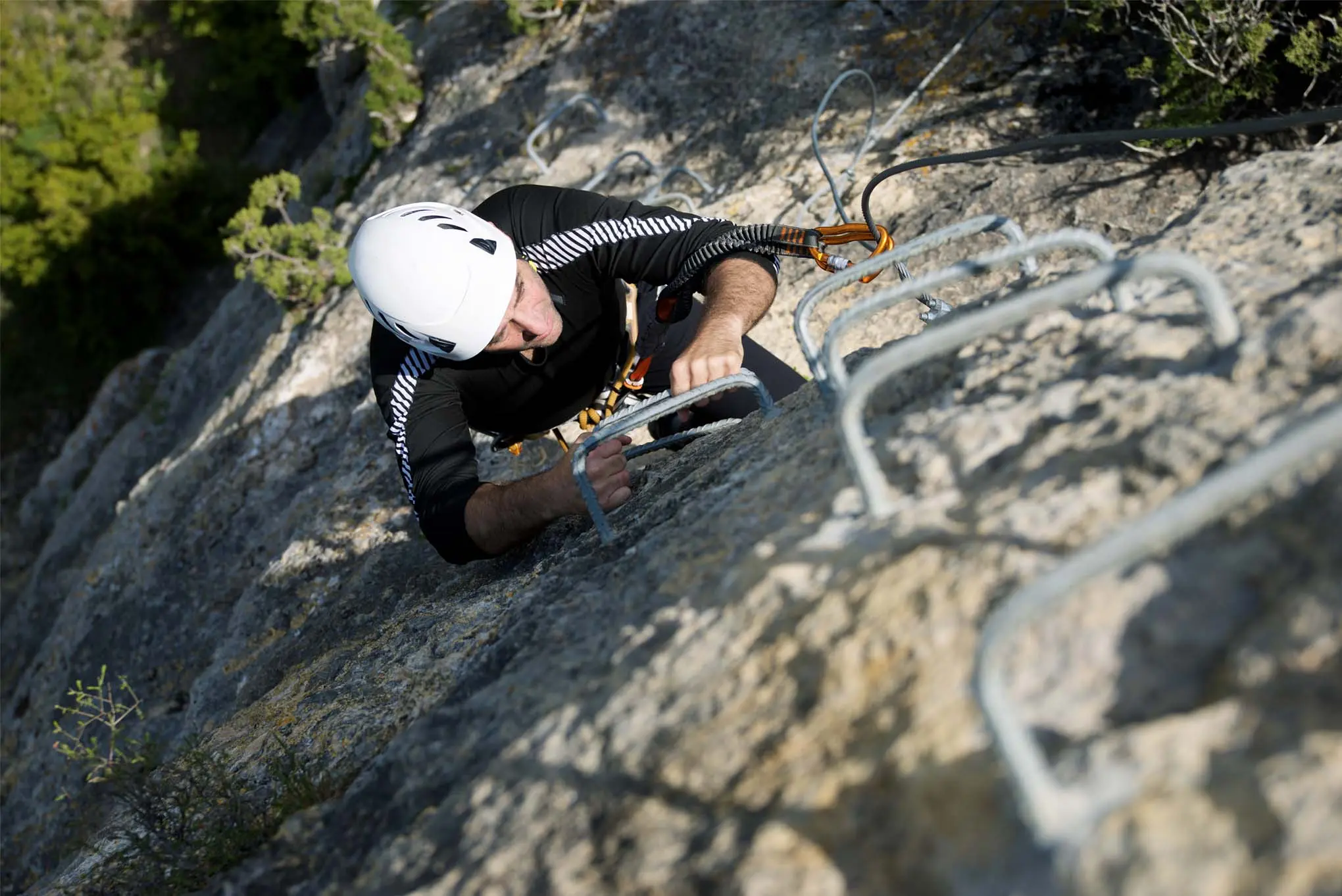
Climbing on equipped rock faces
The route follows a rock face equipped with rungs, cables, and footbridges. Participants move forward gradually, alternating between walking, climbing, and crossing.
The courses may include rope bridges, vertical sections, and elevated sections that create a strong sense of vertigo.
Feedback and Completion of the Program
Once you’ve completed the via ferrata, there’s usually a trail that leads back down to the starting point. This part of the hike gives you a chance to recover after a challenging and sometimes strenuous route.
Where can you go via ferrata in Corsica?
Corsica has established itself as a must-visit destination for via ferrata in France. Nestled between the sea and the mountains, the “Island of Beauty” offers spectacular routes that combine rocky cliffs, Mediterranean panoramas, and a wild, untamed atmosphere. Corsican via ferrata appeals to thrill-seekers as well as hikers looking for a unique experience in the great outdoors.
Via ferrata in Corsica: Between the Sea and the Mountains
Via Ferrata in Corsica stands out for its exceptional setting. Unlike traditional Alpine trails, Corsican routes often offer breathtaking views of the Tyrrhenian Sea or the granite peaks of the island’s interior.
The routes are generally located in preserved natural areas, near cities such as Bastia and Corte, or in the island’s iconic mountainous regions. This diversity makes it possible to enjoy via ferrata both in the high mountains and in spectacular coastal settings.
An accessible sport in Corsica
Via ferrata in Corsica has become a popular outdoor activity among both visitors and locals. It offers a unique way to explore Corsica’s landscapes by combining hiking, rock climbing, and safe progression along rock faces.
Thanks to modern equipment (ropes, metal ladders, suspension bridges), this activity remains accessible with proper supervision. It is suitable for both beginners and more experienced participants looking to tackle more technical courses.
A unique experience in the heart of the Isle of Beauty
Via ferrata in Corsica during the off-season offers a total immersion in unspoiled natural environments: limestone cliffs, rugged mountains, maquis, and exceptional panoramic views.
It’s the perfect way to explore Corsica’s stunning landscapes in a different way, off the beaten path. Combining adventure, the thrill of climbing, and the chance to explore the region, via ferrata in Corsica is a must-try experience for nature and sports enthusiasts.
A via ferrata is an activity to try during a trip to Corsica. It takes place in the heart of nature and is now considered a must-try experience in Corsica. Historically originating in the mountainous regions of Europe and developed in the 1930s by the Italian Alpine Club, it has evolved into a safe, accessible activity that is perfectly suited to Corsica’s terrain.
With its steel cables, metal rungs, ladders, and suspension bridges, the via ferrata in Corsica allows you to make your way up rock faces while taking in spectacular scenery between the sea and the mountains. The Isle of Beauty offers a unique setting where cliffs, maquis, and coastal panoramas combine to provide a total immersion in nature.
Whether it’s your first time or you’re looking for more technical and steep routes, the via ferrata in Corsica offers a well-rounded athletic adventure. It combines thrills, safety, and the chance to explore the island’s exceptional landscapes, making this activity a memorable experience for all nature lovers and thrill-seekers.
FAQ
What exactly is a via ferrata?
A via ferrata is a sport that involves climbing a rock face equipped with steel cables and metal fixtures. It allows climbers to traverse vertical sections using a safety lanyard. Available at various difficulty levels, it combines hiking and rock climbing.
Do you need to be in good physical shape for your first via ferrata?
Your first via ferrata doesn’t require a high level of athletic ability, but being in good physical condition is recommended. Beginner routes are designed to make it easier to progress. The equipment and metal fixtures make the activity accessible even to novices.
What equipment is essential for a via ferrata?
Via ferrata gear includes a helmet, a harness, and a lanyard equipped with two carabiners. This system ensures safety on the lifeline. Gloves and appropriate footwear are essential additions to the gear.
Where can you find the most beautiful via ferratas?
The most famous via ferratas are found in the Alps, the Dolomites, and Austria. France also offers many scenic via ferrata routes. These regions feature a variety of challenging and spectacular routes.
Is a via ferrata dangerous?
Via ferrata is a safe activity when done properly with the right equipment. Double lanyards and the safety line greatly reduce the risks. The main danger comes from improper use of the equipment or adverse weather conditions.