
In 2026, the Costa Verde stands out as a micro-region of exceptional natural and cultural richness on the eastern coast of Corsica. A true anchor point, Moriani Plage invites you to discover a region that extends far beyond its fine sandy beaches bordering the Tyrrhenian Sea.
Its ideal location makes daily excursions much easier. Taking advantage of the mild Mediterranean climate, hikers can venture inland, where the mountains unfold their high-altitude forests and steep valleys, connected by picturesque mule trails leading to centuries-old schist villages.
In order to preserve the local wildlife, new ecotourism itineraries have been created, reflecting a perfect blend of modernity and the traditions of Castagniccia. This guide invites you to set out on The beach towel to explore a hidden, untamed, and deeply human side of Corsica.
The Hilltop Villages of the Costa Verde: A Journey Back in Time
The mountain of Costa Verde is dotted with small, picturesque villages that overlook the eastern plain. These historic hamlets have preserved their traditional architecture, built of gray schist, and their slate roofs. It is worth noting that life still revolves around the church square, where The water fountains of fresh spring water flow continuously.
Strolling through these narrow streets is still the best way to soak up the spirit of Corsica. That said, getting to these villages requires careful driving on winding roads. It’s worth noting that every turn offers a spectacular new view of the Tuscan archipelago.
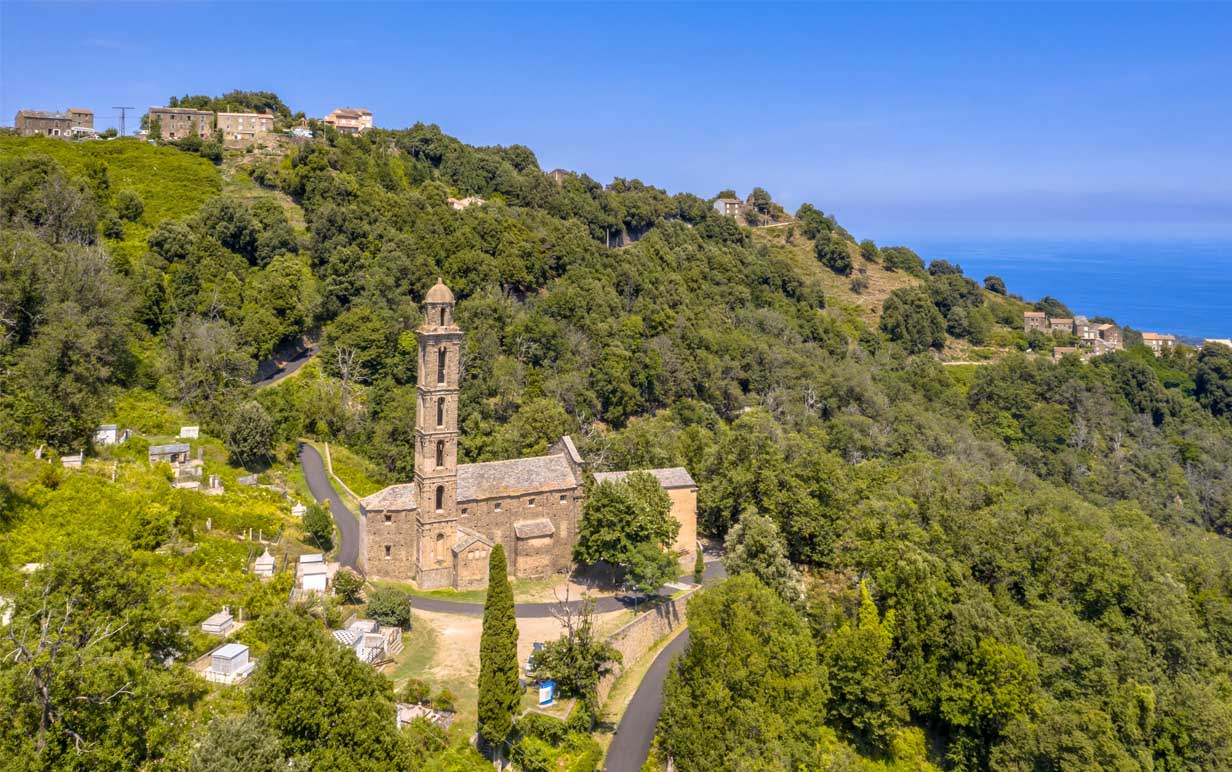
San Giovanni di Moriani and Its Religious Heritage
Nestled amid chestnut groves just a few kilometers from the coast, San Giovanni di Moriani consists of several hamlets characterized by their granite houses with austere yet charming facades. Overlooking the valley, the village boasts a remarkable Baroque bell tower, a true testament to centuries past.
The main appeal of these places undoubtedly lies in the absolute tranquility that reigns there, far from the crowds. In addition, the town serves as a gathering place for many long-distance hiking trails. To prevent hikers from getting lost, these trails are now marked with high-precision digital signage. This allows hikers to fully enjoy the cool shade of the woods on hot afternoons.
Santa Maria Poggio and the Ucelluline Waterfall
Santa Maria Poggio is a must-see destination in the heart of the Costa Verde. It offers a remarkable view of the Taverna marina, the village is world-renowned for the famous Ucelluline Waterfall. This exceptional natural site serves as a geographical boundary between Santa Maria Poggio and San Nicolao.
Best reached by car via the Corniche Road, the waterfall reveals the crystal-clear waters of the river flowing into a pristine pool, surrounded by lush vegetation. This spot is particularly spectacular in the spring, when the snow melts on the mountain peaks. Hikers love to capture this curtain of water shimmering in the afternoon light:
- the tour of the parish church, perfect for admiring recently restored Baroque paintings;
- the breathtaking view from the village cemetery, revealing a 180-degree panoramic view of the sea;
- meetings with local artisans that include tastings of traditional cured meats in the heart of their schist cellars.
The network of villages located in the hinterland of Moriani represents a cultural heritage of inestimable value. Municipalities are actively working together to preserve the trails in hiking trails, making it possible to travel from one hamlet to another without ever crossing the main roads.
The Heart of Castagniccia: A Land of Chestnut Trees and History
That’s where the Costa Verde As one climbs toward the peaks of the interior, the Castagniccia region begins. This mysterious region owes its name to the chestnut tree—Corsica’s “bread tree”—which was planted on a massive scale by the Genoese.
It should be noted that Castagniccia was the beating heart of the Corsican revolution in the eighteenth century under the leadership of Pascal Paoli. Its dense forests conceal ruined convents as well as Baroque churches from unimagined splendor. It must be said that the atmosphere of this region is truly unique, almost mystical…
The village of Cervione and St. Erasmus Cathedral
Located very close to Moriani, Cervione is the historic capital of Castagniccia eastern. Note that this village is built in an amphitheater-like formation against the cliffs of Monte Castello. The Saint-Erasme Cathedral, built in the 18th century, is one of the earliest examples of Baroque architecture in Corsica; its richly decorated interior bears witness to the city’s past prosperity.
You should also know that Cervione is home to the ethnographic museum of Costa Verde. This museum displays a unique collection of everyday objects from the past, ranging from carpentry tools to kitchen utensils traditional cuisines. Note that its guided tour helps visitors understand the importance of chestnut cultivation to the island’s subsistence economy, making it an essential cultural stop for families on vacation.
The Alesani Convent: The Sanctuary of the Corsican Nation
Deeper in the forest, the Franciscan monastery of Alesani is a place steeped in history and emotion. It was here that he was crowned Theodore de Neuhoff, the only king of Corsica, in 1736. The convent retains an atmosphere of contemplation and majesty despite the ravages of time. The ancient stones bear witness to the secret gatherings of Corsican patriots fighting for their freedom.
In addition, note that the convent houses priceless works of religious art, including the famous painting of “The Virgin with the Cherry”. It should be noted that the site is the focus of a very active heritage preservation program.
The area around the convent is perfect for leisurely walks among centuries-old chestnut trees. Believe it or not, the silence of the valley is broken only by the murmur of the streams winding through the rocky gorges.
Major natural sites between the sea and the mountains
The Costa Verde is notable for the variety of its ecosystems, all concentrated within a small area. As you leave the beaches of Moriani, it only takes a few minutes to find yourself in the heart of the wilderness. Keep in mind that the region’s biodiversity is protected by strictly regulated nature reserves.
Built in the 18th century, St. Erasmus Cathedral is one of the earliest examples of Baroque art on the island, featuring interior decorations that reflect the region’s former opulence.
In addition, the Costa Verde Ethnographic Museum, located in Cervione, houses an exceptional collection that traces life in days gone by through traditional handicraft tools and kitchen utensils. This guided tour, a must for families, highlights the central role of the chestnut in Corsica’s traditional subsistence economy.

The Alesani Convent, a landmark of Corsican history
Nestled in the heart of the forest, this Franciscan monastery remains steeped in history and emotion. It was here, in 1736, that Théodore de Neuhoff was crowned King of Corsica. Despite the passage of time, the site retains a solemn and peaceful atmosphere, evoking the clandestine gatherings of patriots seeking independence.
Currently the focus of a preservation project, the convent houses precious sacred works of art, such as the famous *Virgin with a Cherry*. Nearby, walking trails wind beneath centuries-old chestnut trees, where only the gentle lapping of the streams breaks the valley’s tranquility.
Major ecosystems from the coast to the mountain peaks
The Costa Verde stands out for the diversity of its natural habitats, all concentrated within a small area. From the beaches of Moriani, the wilderness quickly opens up to visitors, protected by strict environmental reserves.
With its mountainous terrain and coastal lagoons, the region offers the perfect setting for lovers of the great outdoors—provided they adopt a respectful attitude to help preserve these places.
The Biguglia Lagoon Bird Sanctuary
Located north of Moriani, on the road to Bastia, the Biguglia Lagoon is Corsica’s largest lagoon area.
Lovers of the great outdoors will find this an ideal setting, nestled between coastal lagoons and mountain ridges. That said, preserving these sites requires responsible behavior on the part of visitors.
The Biguglia Lagoon and the Bird Sanctuary
Located north of Moriani, on the way to Bastia, Biguglia Lagoon is the largest lagoon in Corsica. This exceptional body of water covers nearly two thousand hectares and serves as a vital stopover for thousands of migratory birds.
Its bird sanctuary is home to pink flamingos, gray herons, and rare species of fish-eating birds of prey. To explore this fragile environment without disturbing it, visitors can take marked trails built on stilts, while an eco-museum housed in a former Genoese fort offers insight into how it operated.
Furthermore, this site perfectly balances economic benefits with environmental conservation. Traditional fishing here continues to be governed by very strict ancestral rules, thereby allowing the local fishermen to supply the region’s restaurants with fresh fish and top-quality bottarga.
Mount San Petrone and the Castagniccia ridges
A Must-See climb up Monte San Petrone It stands as the ultimate challenge for experienced hikers. This schist peak, rising to nearly 1,800 meters, offers a breathtaking view of the entire Castagniccia region and the Costa Verde.
Starting at the Col de Prato, the route winds its way into the heart of a magnificent forest of ancient beech trees. Upon arrival, the physical effort is richly rewarded by a breathtaking panorama that stretches from the Aléria plain all the way to Cap Corse.
Please note, however, that this hike requires appropriate hiking gear and excellent physical fitness, because the weather in the mountains can change quickly, even during the summer. Hikers will be treated to spectacular scenery, where the small villages perched on the mountainsides look like miniature models, made even more beautiful at the end of the day by the golden light of a striking splendor against the surrounding landscape:
- The Marana Lagoon is perfect for sea kayaking excursions or stand-up paddleboarding;
- exploring the island’s endemic flora, such as the Corsican hellebore Corsica, along the ridge trails;
- a tasting of the renowned iron-rich sparkling mineral water from the thermal springs ofOrezza.
Thanks to the diversity of its natural areas, the Costa Verde is a true paradise for nature lovers. In addition, new interpretive signs provide educational information about the local geology. These themed trails are particularly popular with families, as they combine the pleasure of walking with fascinating scientific discoveries.
Maritime Heritage and Water Sports in Moriani
Bordered by a dynamic coastline, Moriani Plage offers a wide range of recreational and exploratory activities. Its fine-sand beaches stretch as far as the eye can see and feature first-rate visitor facilities.
Swim safety is fully ensured throughout the summer by modern lifeguard stations. Ideal for swimming and underwater exploration, the crystal-clear waters of the Tyrrhenian Sea are sure to appeal to water sports enthusiasts. In addition, the region is also known for the beauty of its charming port facilities.
The Port of Taverna and Yachting on the Costa Verde
The port stands out as a prime starting point for a sea voyage to Elba or the Tuscan Archipelago. Beneath the surface, scuba divers explore fascinating shipwrecks dating back to World War II. Thanks to the exceptionally clear water, visibility remains remarkable even at great depths, revealing an underwater ecosystem teeming with groupers and barracudas.
Relaxation and Activities Along the Costa Verde Coastline
Ideal for families, the beaches of Moriani and Poggio-Mezzana and San Nicolao reveal vast stretches of fine sand perfect for relaxation. Spared the mass tourism typical of the island’s south, the Costa Verde reveals its untamed natural beauty, as exemplified by its protected dunes along the wind erosion with wooden fences. Along the shore, the shade of the eucalyptus trees provides welcome shelter for vacationers.
For water sports enthusiasts, several clubs offer catamaran rentals, modern jet skis, or windsurfing boards, taking advantage of steady, moderate summer winds. From the water, the view of the Castagniccia Mountains is truly spectacular, especially at sunset when the landscape is bathed in unforgettable contrasts.
Flavors and Expertise: The Artisanship and Gastronomy of the Costa Verde
Exploring the Costa Verde undoubtedly means meeting local artisans and producers. Shaped by human labor, this region showcases exceptional generosity.
Authentic flavors come together, particularly at the traditional markets in Moriani, where you can find specialties protected by strict certification standards, such as theAOP for Corsican honey or cured meats. Among families in the interior, The transmission of know-how remains a fundamental and sacred value.
The beaches of the Costa Verde and unspoiled relaxation
Perfect for relaxing with the family, the fine-sand beaches of Moriani and Poggio-Mezzana and San Nicolao are known for their authenticity. Unlike the more crowded areas in the south of the island, the Costa Verde is home to wild areas untouched by crowds, where wooden fences protect the dunes from the wind erosion where travelers enjoy the shade of the eucalyptus trees along the shore.
In addition, sailing clubs offer catamaran rentals, modern jet skis, and windsurf boards for easy cruising thanks to steady but moderate summer breezes. From out on the water, the view of the Castagniccia Mountains is truly spectacular, offering stunning contrasts of light at sunset for coastal hikers.
Local Cuisine and Handicrafts: A Sensory Journey Through Costa Verde
Exploring the Costa Verde undoubtedly involves discovering its producers and artisans. The result of people’s hard work and the richness of the land, the region reveals a terroir of exceptional generosity.
Moriani’s traditional markets are the hub of these authentic flavors, where local specialties are often protected by strict quality certifications, such as theAOP for cured meats or Corsican honey. It turns out that The transmission of know-how remains a cherished value at the heart of families in the interior.
Cervione Hazelnuts and Local Delicacies
Renowned as the hazelnut capital of Corsica, the village of Cervione celebrates this exceptional nut, which bears a Protected Geographical Indication (PGI). Artisans in the region transform this local delicacy into Nuciola, an exceptional spread made without palm oil and of remarkable finesse. It’s the perfect accompaniment to a cup of coffee enjoyed at The village terraces—there’s nothing quite like the must-try hazelnut canistrelli.
Every year, the hazelnut festival attracts thousands of visitors at the end of August. This cultural event Majeur celebrates the island’s culinary heritage through cooking workshops and traditional polyphonic singing. It’s the perfect time to fill your vacation shopping basket with healthy and sustainable products by buying directly from the local producers.
Castagniccia cured meats and sheep’s-milk cheeses
Castagniccia is the historic home of pork of pure Nustrale breed, raised in complete freedom in the chestnut forests. This method of raising the pigs gives the cured meats (coppa, lonzu, prisuttu) a nutty flavor and a texture unlike any other in the world. Producers are happy to open their traditional wooden drying rooms to explain The process of smoking with chestnut wood.
In addition, sheep’s-milk cheeses and local goat cheese are served with the famous Corsican fig jam. It’s worth noting that the flavors are robust and reflect the richness of the spring maquis flora. Believe it or not, the shepherds continue to use production methods that have remained unchanged since the the Middle Ages. Tasting these products is like getting a firsthand experience of the very essence of the pastoral culture of the “Island of Beauty.”
Practical Information for a Great Trip Around Moriani
To fully enjoy the treasures of the Costa Verde, here are a few organizational tips to keep in mind before you leave. The region is easily accessible but requires a certain degree of independence when getting around in order to explore the mountain villages.
We strongly recommend renting a vehicle suitable for mountain roads as soon as you arrive at theBastia-Poretta Airport, located just thirty minutes north of the seaside resort. That said, the public transportation network remains limited in the mountainous hinterland.
The best time to visit the Costa Verde
The best time for your trip to Corsica depends first and foremost on your travel preferences. To admire the maquis in all its radiant beauty If you’re planning hikes, May and June are the best months. On the other hand, the summer months of July and August are perfect for water sports and the cultural festivities that liven up the evenings in the hilltop villages.
Late summer, in September and October, also offers remarkably mild weather and waters that are still perfect for swimming. In addition, fall marks the beginning of the chestnut harvest, painting the forest landscapes in magnificent shades of russet and gold. Thus, The Costa Verde stands out as an attractive year-round destination for travelers seeking peace and quiet.
Essential gear for exploring the region
To explore the Costa Verde at your leisure, be sure to pack items suitable for both the beach and the mountains. So, be sure to pack a swimsuit for enjoying the coast, but also be sure to wear sturdy hiking shoes for walking on the slate trails. To stay well-hydrated during your high-altitude hikes, an insulated bottle is essential for keeping the water from the village springs cool.
When it comes to navigation, you can rely on digital tools; mapping apps remain fully functional even in the most remote valleys of the hinterland. In addition, feel free to contact the local tourist offices, which provide comprehensive printed guides—complete with hiking maps—free of charge.
Finally, sunscreen is essential in all circumstances, whether you choose the fine sand of Moriani or the steep ridges of Monte San Petrone. Good preparation is the key to a memorable trip without any surprises in the heart of authentic Corsica.